1. UAV Design Assistance and Simulation

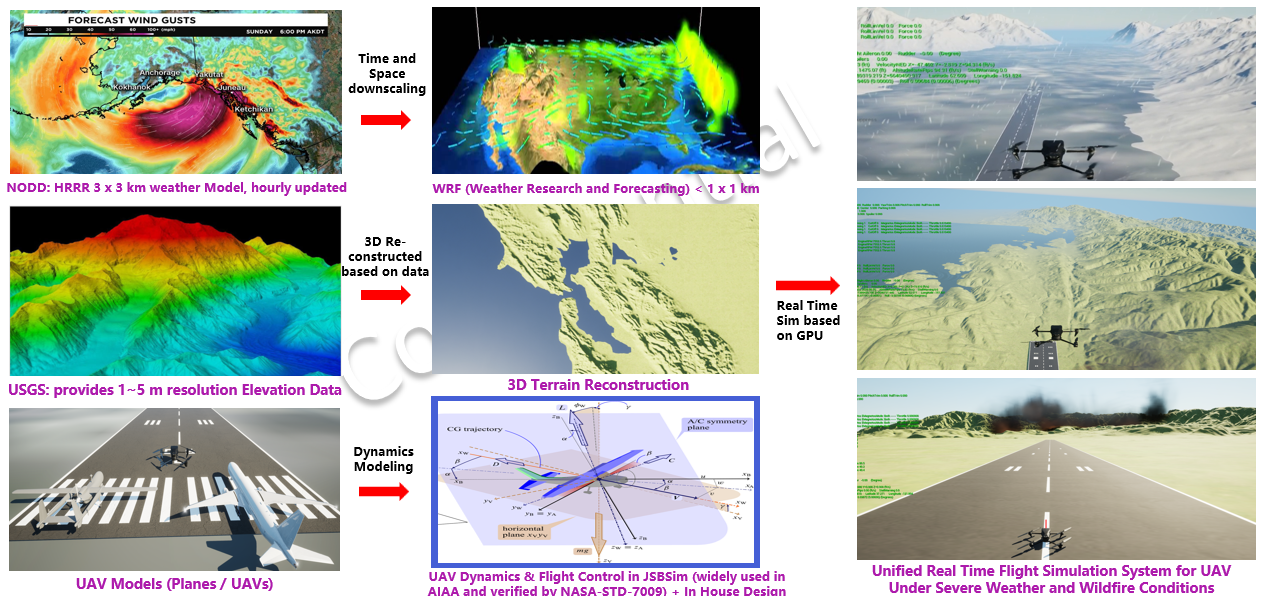
This solution line covers UAV model customization, weather-coupled flight simulation, and control validation for mission safety and performance analysis.

UAV - System Architecture

Environment and Data Layer

  • NODD/HRRR weather ingest and WRF downscaling for local fields.
  • USGS terrain reconstruction for high-resolution topography.
  • Scenario definitions for wind shear, gusts, and wildfire disturbance.
  • Time-synchronized replay for repeatable engineering runs.
Flight and Control Layer

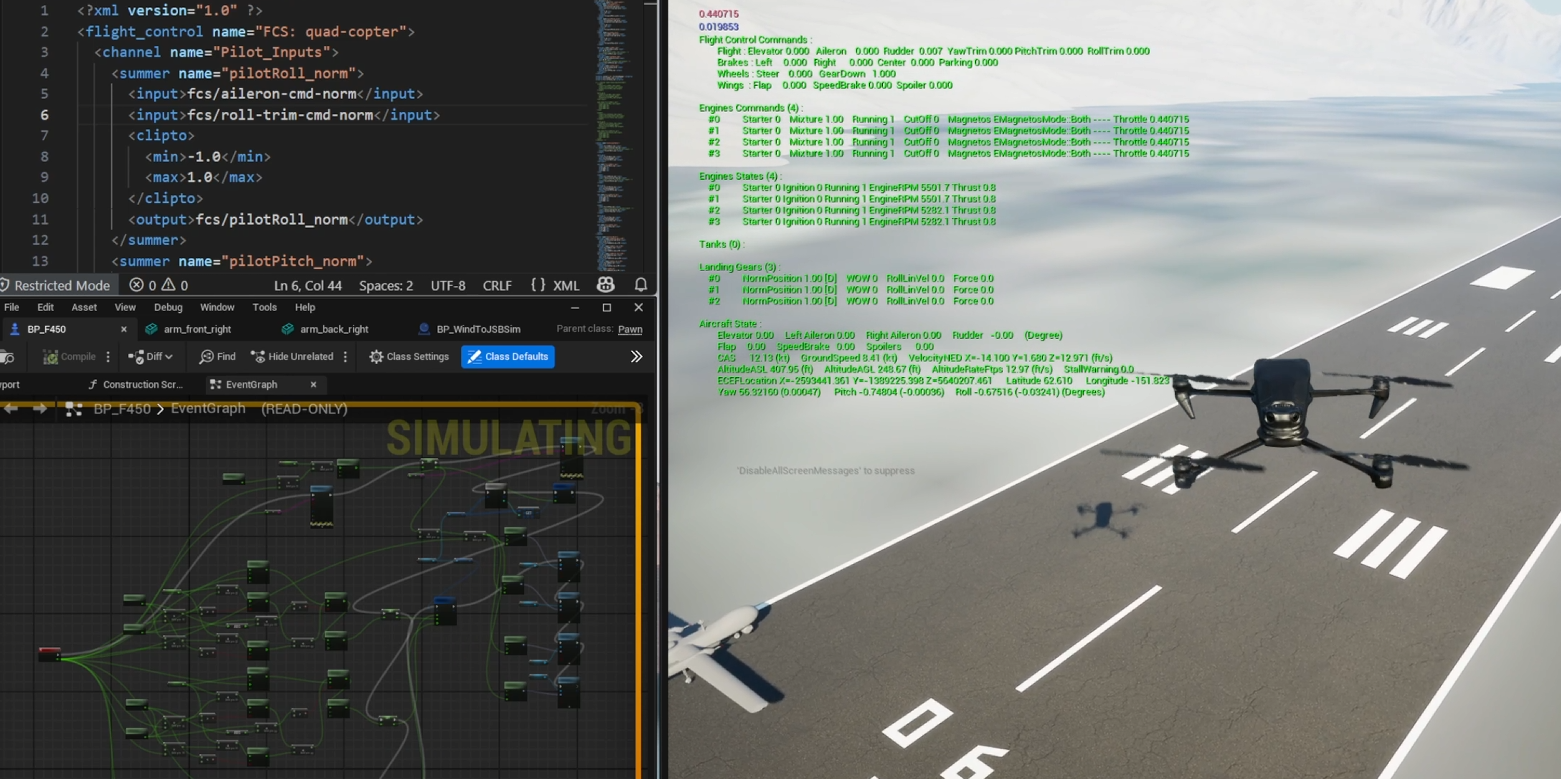
  • JSBSim and in-house dynamics engines for fixed-wing and multi-rotor UAVs.
  • Manual and SCAS-assisted control loops for stability and training.
  • SITL/HIL integration with real flight controllers and mission modules.
  • Real-time logging and validation interface for tuning and comparison.
UAV flight control architecture

UAV - Modeling Depth

Airframe and Aerodynamics

Mass, CG, inertia tensor, aerodynamic polars, stability derivatives, and control effectiveness are configurable per UAV model.

Propulsion and Actuators

Thrust and torque maps, throttle or RPM effects, servo rate limits, and mixer definitions for platform-specific behavior.

Weather-Flight Interaction

Wind field coupling with terrain profile, turbulence, and disturbance sources for robustness and envelope validation.

UAV dynamics and response analysis

2. Autonomous Driving Simulation

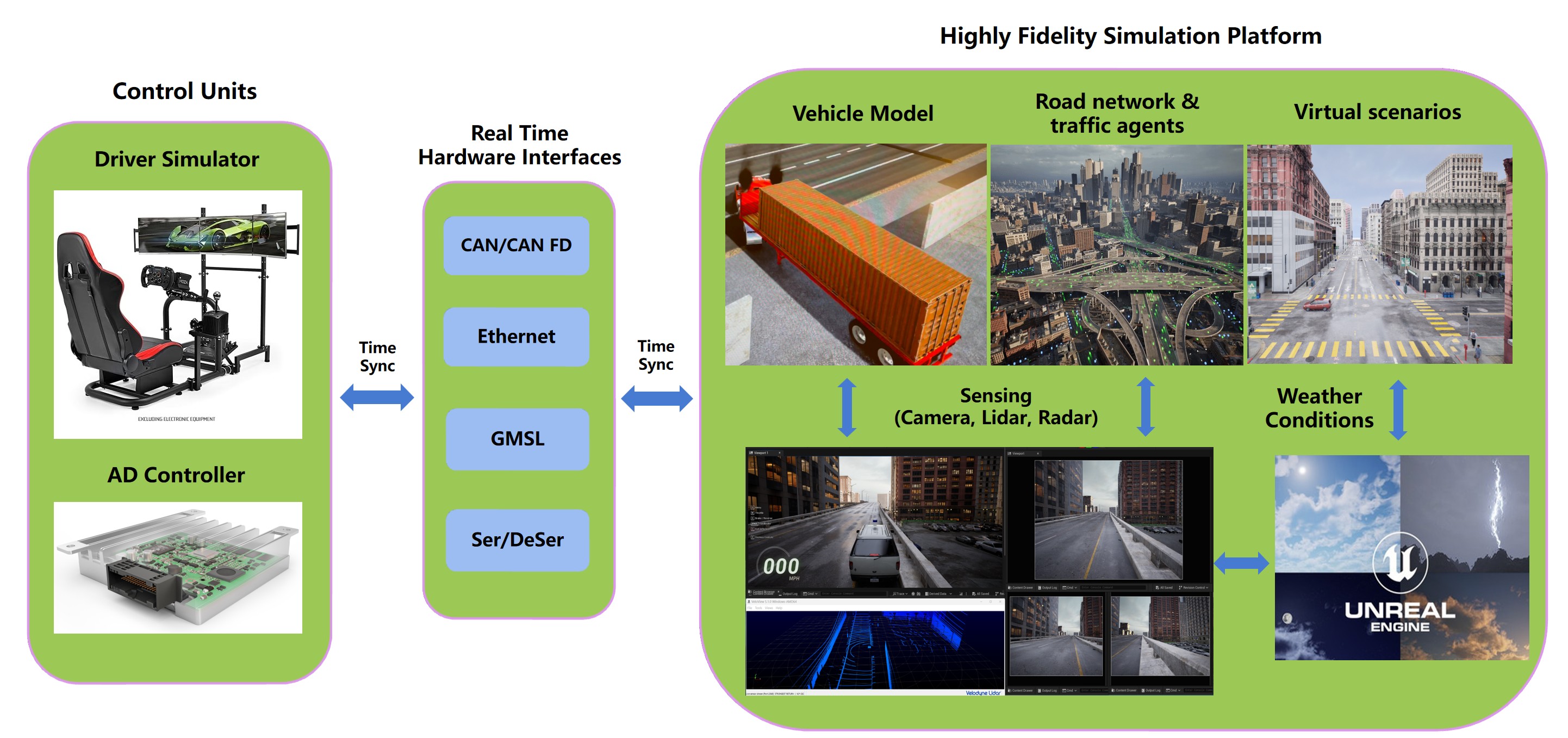
This solution line delivers real-time, multi-sensor autonomous driving simulation for perception, localization, planning, and controller testing.

Autonomous Driving - System Architecture

Scenario and Vehicle Layer

  • Road network generation aligned with real map and HD map data.
  • Vehicle dynamics and traffic actors in UE-based driving scenes.
  • Dynamic weather modules including rain, snow, and fog conditions.
  • Scenario playback for city traffic and maneuver-focused testing.

Sensor and Hardware Layer

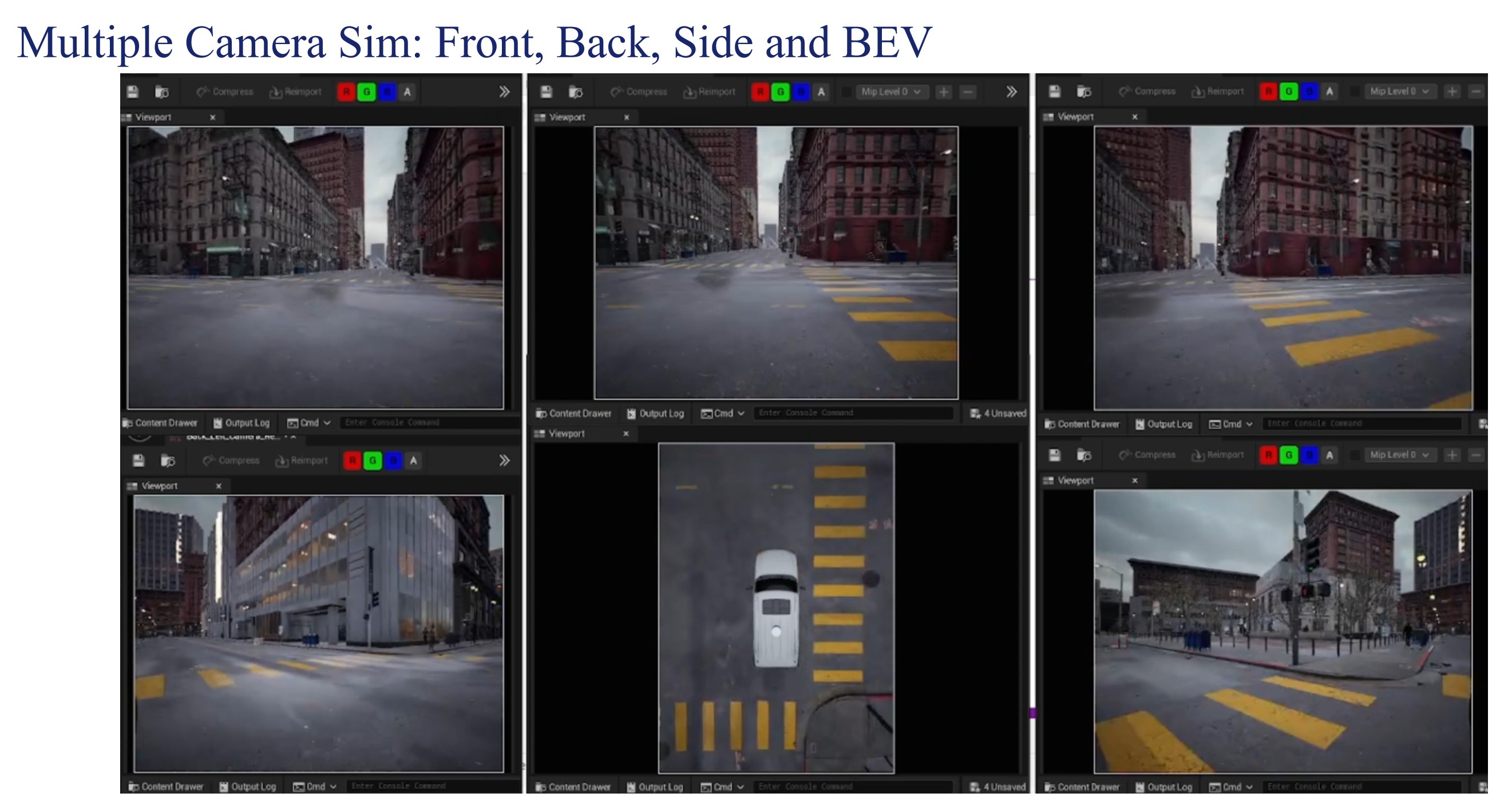
  • Real-time radar, LiDAR, camera, and GNSS/IMU simulation.
  • Interface support: CAN, CAN-FD, Ethernet, GMSL/SerDes, and UDP.
  • Time synchronization across simulation and hardware pipelines.
  • Closed-loop integration with perception and control stacks.
Autonomous driving multi-sensor architecture

Autonomous Driving - Modeling Depth

Vehicle Dynamics and Control

High-fidelity dynamics models calibrated against real vehicle data, including steering, braking, and longitudinal response.

Sensor Physics and Data Paths

Sensor-specific modeling for camera optics, LiDAR returns, radar detection output, and real-time transfer pipeline behavior.

Localization and Road Fidelity

Real-road-aligned curvature, slope, friction, and GNSS trajectory output for localization and map-based planner validation.

Autonomous driving modeling and validation